
Johnny Nash - I Can See Clearly Now - CBS - Reggae
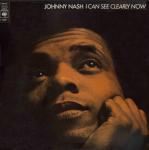 |
Price | £13.00 |
Track ListingA1 Stir It UpA2 That\'s The Way We Get By A3 Guava Jelly A4 (It Was) So Nice While It Lasted A5 Ooh Baby You\'ve Been Good To Me A6 You Poured Sugar On Me B1 I Can See Clearly Now B2 Comma Comma B3 We\'re All Alike B4 How Good It Is B5 The Fish And The Alley Of Destruction B6 There Are More Questions Than Answers Media Condition » Near Mint (NM or M-) Sleeve Condition » Very Good Plus (VG+) |
| Artist | Johnny Nash | ||
| Title | I Can See Clearly Now | ||
| Label | CBS | ||
| Catalogue | 64840 | ||
| Format | Vinyl Album | ||
| Released | 1972 | ||
| Genre | Reggae |
Other Titles by Johnny Nash
• Tears On My Pillow (I Can't Take It) • (What A) Wonderful World • Hold Me Tight • My Merry-Go-Round • Rock Me Baby • Rock Me Baby • Tears On My Pillow • What A Wonderful World • Johnny Nash's Greatest Hits • Let's Go Dancing • Rock Me Baby • The Johnny Nash Collection - 20 Of My Favourite Songs • The Johnny Nash Collection - 20 Of My Favourite Songs • You Got Soul So Hold Me Tight •
Information on the Reggae Genre
Reggae is a music genre first developed in Jamaica in the late 1960s. While sometimes used in a broader sense to refer to most types of Jamaican music, the term reggae more properly denotes a particular music style that originated following on the development of ska and rocksteady.Reggae is based on a rhythmic style characterized by accents on the off-beat, known as the skank. Reggae is normally slower than ska but faster than rocksteady. Reggae usually accents the second and fourth beat in each bar, with the rhythm guitar also either emphasising the third beat or holding the chord on the second beat until the fourth is played. It is mainly this "third beat", its speed and the use of complex bass lines that differentiated reggae from rocksteady, although later styles incorporated these innovations separately.
The shift from rocksteady to reggae was illustrated by the organ shuffle pioneered by Bunny Lee, and featured in the transitional singles "Say What You're Saying" (1967) by Clancy Eccles, and "People Funny Boy" (1968) by Lee "Scratch" Perry. The Pioneers' 1967 track "Long Shot Bus' Me Bet" has been identified as the earliest recorded example of the new rhythm sound that became known as reggae. Early 1968 was when the first genuine reggae records came into being: "Nanny Goat" by Larry Marshall and "No More Heartaches" by The Beltones. American artist Johnny Nash's 1968 hit "Hold Me Tight" has been credited with first putting reggae in the American listener charts.. Also in 1968 was "The Israelites" by Desmond Dekker of Jamaica. Reggae was starting to surface in rock music; an example of a rock song featuring reggae rhythm is 1968's "Ob-La-Di , Ob-La-Da." by The Beatles.
The Wailers, a band that was started by Bob Marley, Peter Tosh, and Bunny Wailer in 1963, are generally agreed to be the most easily recognised group worldwide that made the transition through all three stages — from ska hits like "Simmer Down", through slower rocksteady, to reggae. In addition to the Wailers, other significant pioneers include Prince Buster, Desmond Dekker, Jackie Mittoo and several others.
Jamaican producers were influential in the development of ska into rocksteady and reggae in the 1960s. Some of the many notable Jamaican producers who were highly influential in the development of ska into rocksteady and reggae in the 1960s include Coxsone Dodd, Lee "Scratch" Perry, Leslie Kong, Duke Reid, Joe Gibbs and King Tubby. An early producer was Chris Blackwell, who founded Island Records in Jamaica in 1960, then relocated to England in 1962, where he continued to promote Jamaican music. He formed a partnership with Trojan Records, founded by Lee Gopthal in 1968. Trojan released recordings by reggae artists in the UK until 1974, when Saga bought the label.
Another well-known producer of Jamaican music is Vincent Chin, who received his first taste of the music business maintaining jukeboxes at bars. This led him to start selling old records from jukeboxes he repaired, that would otherwise be discarded for new ones. In 1958, the success of Chin's jukebox record venture led him to open a retail store in downtown Kingston. In 1969, Chin and his wife Pat opened a studio called Randy's Studio 17, where Bob Marley & The Wailers recorded their album Catch A Fire, and Peter Tosh recorded his first two solo albums Legalize It and Equal Rights. Around the corner from the studio was a small street that was affectionately dubbed Idler's Rest, where reggae artists hung out and producers picked up musicians and singers for recording. Chin's eldest son Clive Chin earned his status as a producer. In 1971 or 1972, he launched the dub label Impact Records, and with Augustus Pablo, produced and recorded at Studio 17 the first ever dub album, Java.
The 1972 film The Harder They Come, starring Jimmy Cliff, generated considerable interest and popularity for reggae in the United States, and Eric Clapton's 1974 cover of the Bob Marley song "I Shot the Sheriff" helped bring reggae into the mainstream. By the mid 1970s, reggae was getting radio play in the UK on John Peel's radio show, and Peel continued to play reggae on his show throughout his career. What is called the "Golden Age of Reggae" corresponds roughly to the heyday of roots reggae. In the second half of the 1970s, the UK punk rock scene was starting to form, and some punk DJs played reggae songs during their sets. Some punk bands incorporated reggae influences into their music. At the same time, reggae began to enjoy a revival in the UK that continued into the 1980s, exemplified by groups like Steel Pulse, Aswad, UB40, and Musical Youth. Other artists who enjoyed international appeal in the early 1980s include Third World, Black Uhuru and Sugar Minott. The Grammy Awards introduced the Best Reggae Album category in 1985.
Data from the Discogs music database. Submit a Release.
